Bergen County Historical Society
River Edge
1201 Main Street
River Edge, NJ 07661
201-343-9492
Historic listing preserved from the original NJTGO Bergen County historic places directory.

Explore Bergen County's Dutch sandstone houses, Revolutionary War landscapes, churches, schools, rail landmarks, aviation history, burial grounds, farms, and preservation resources.
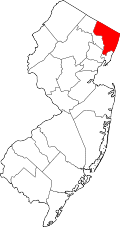
Historic places across Bergen County, from the Hackensack River valley and Pascack Valley to the Palisades, Ramapo foothills, and Meadowlands communities.
Bergen County history stretches from early Dutch and Huguenot settlement through the American Revolution, 19th-century rail growth, civic institutions, aviation development, farms, mills, churches, schoolhouses, and preserved county landmarks.
This refreshed NJTGO guide keeps the original historic-place directory intact while reorganizing it into a cleaner, easier-to-browse format for residents, visitors, researchers, teachers, and local-history fans.
Preserved from the original NJTGO Bergen County Historic Places directory.
Historic sites organized by municipality and local area for faster browsing.
Many entries connect to Washington, militia activity, raids, bridges, burial grounds, and military movement.
Early Bergen County architecture includes Dutch Colonial, sandstone, Reformed church, barn, and farmstead sites.
These entries help frame the broader directory, from Historic New Bridge Landing and Hackensack-area Revolutionary War history to Park Ridge Dutch barn heritage, Teterboro aviation history, and Camp Merritt's World War I legacy.
River Edge
1201 Main Street
River Edge, NJ 07661
201-343-9492
Historic listing preserved from the original NJTGO Bergen County historic places directory.
Hackensack
Court Street and Church Street
Hackensack, NJ 07601
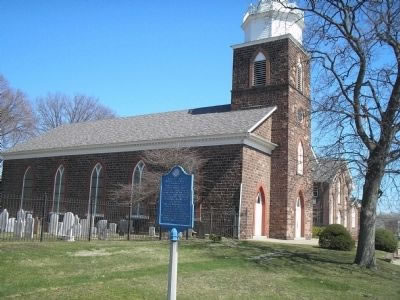
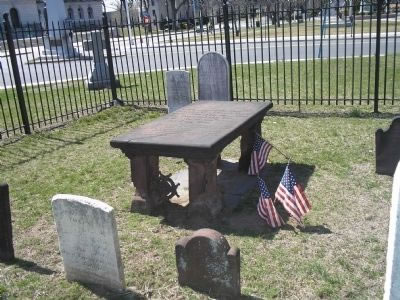
Earliest records of this pioneer Dutch church, dated 1686, mark it as the second oldest in New Jersey. Old stones embedded in the east wall show the initials of founding families and first settlers. The old burying ground contains the grave of General Enoch Poor, a Revolutionary officer. His funeral was attended by Generals Washington and Lafayette and a portion of the American army.
River Edge
Main Street
River Edge, NJ 07661
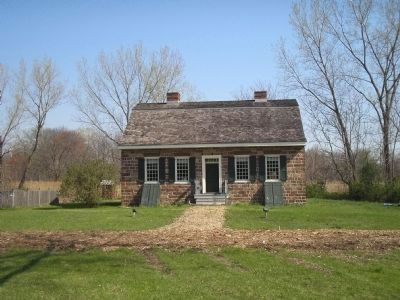
Willem Campbell built this house in April 1774 in New Milford. He and his wife raised 9 children in the house, four of the sons going on to serve in the Bergen Militia during the Revolutionary War. The house was moved to this location on September 27, 1977.
River Vale
River Vale Road & Red Oak Drive
River Vale, NJ
201-336-7267
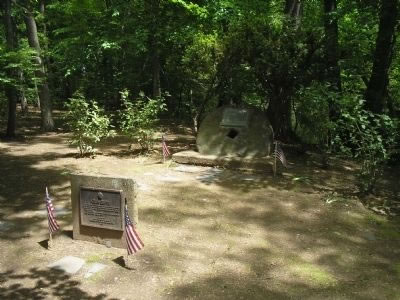
Burial site in memory of American soldiers killed during the Revolutionary War in the "Baylor Massacre" on September 28, 1778. Lt. Col. George Baylor's 3rd Regiment of Continental Dragoons took quarters for the night on several nearby farms. Tories betrayed their presence to a British force, who surrounded the Dragoons during the night. A number of Americans were killed or wounded after they had surrendered.
Park Ridge
Pascack Road
Park Ridge, NJ 07656
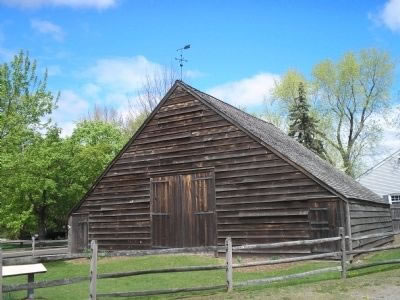
This pre-Revolutionary Dutch barn was built by the Wortendyke family. Once common in the Hudson River area, the barn is one of the few remaining in this country. Broader than deep, the structure is entirely supported by four H-frames tied with massive anchor beams. Front and rear wagon doors permit through access to the threshing floor, which is flanked by side aisles for animals.
Teterboro
Industrial Avenue
Teterboro, NJ 07608
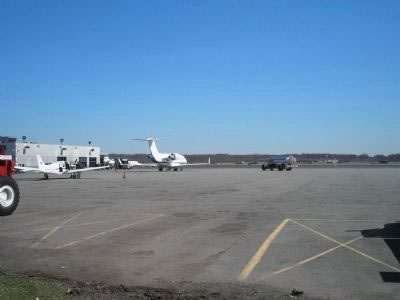
The home of Gates Flying Circus. Teterboro built Fokker tri-motors flown by Richard E. Byrd over the North Pole (1926); South Pole (1929); Atlantic (1927); and by Amelia Earhart over Atlantic (1928). Clarence Chamberlin, Ruth Nichols, Floyd Bennett, Charles A. Lindbergh, Bernt Balchen and Bill Odom flew here. First airmail route flown to Boston (1926). Teterboro is now (1972) a general aviation airport.
Cresskill
Madison Avenue and Knickerbocker Road
Cresskill, NJ 07626
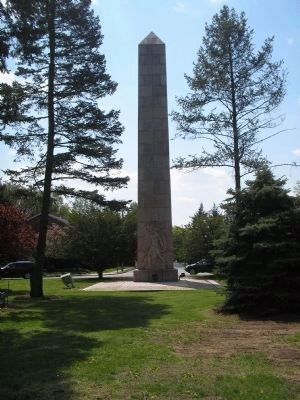
In memory of those soldiers who gave their lives for their country while on duty in Camp Merritt. This monument marks the center of the camp and faces the highway over which more than a million American soldiers passed on their way to and from the World War 1917-1919. Erected by the State of New Jersey, the County of Bergen, The Bergen County Historical Society, Officers and men of Camp Merritt. Many patriotic citizens and the Camp Merritt Memorial Association.
Ridgewood
E. Glen Avenue
Ridgewood, NJ 07450
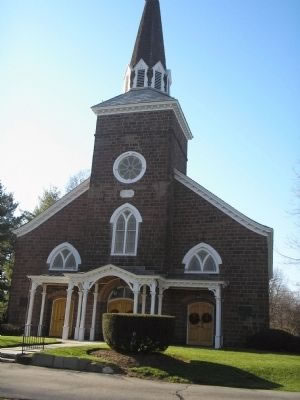
Organized in 1725 by pioneer Dutch settlers, the congregation of this church has worshipped here over 240 years. First church, built 1735 on this land given by Peter Fauconier, a French Huguenot, was a headquarters of Gen. George Washington in 1778 and 1780. During the American Revolution it was used as a barracks, hospital and prison. Present structure, a model of Dutch Colonial architecture, was completed in 1800 using stones from the original church.
Oakland
Franklin Avenue and Ramapo Valley Road
Oakland, NJ 07436
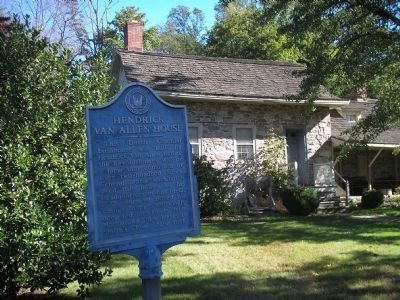
This Dutch Colonial house was built by Hendrick Van Allen before the Revolutionary War on a farm that consisted of over two-hundred acres. General George Washington used this house as his Headquarters on July 14-15, 1777, when he moved his troops over “extremely deep and miry roads” from Morristown, New Jersey to Smith’s Clove, New York.
Includes Washington-related sites, Baylor Massacre, churchyards, militia homes, colonial roads, and Bergen County homes connected to raids and wartime movement.
42 listings include this theme.
Explore Bergen County's Dutch Colonial houses, Reformed churches, barns, farmsteads, and early family homesteads from communities across the county.
56 listings include this theme.
Includes Teterboro Airport, local railroad stations, the Ferryboat Binghamton, and transportation-related sites that shaped Bergen County growth.
8 listings include this theme.
The full directory below is grouped by municipality. Open or close each town section as needed while planning visits or researching local history.
River Edge
1201 Main Street
River Edge, NJ 07661
201-343-9492
Historic listing preserved from the original NJTGO Bergen County historic places directory.
Allendale
209 W. Allendale Avenue
Allendale, NJ 07401
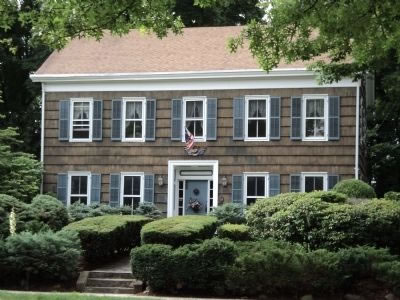
John H Van Houten came to this neighborhood in 1792 and later purchased land. His son, Paul J. Van Houten, built this farmhouse about 1869 on family acreage. In 1870 he willed it to his daughter, Margeret Ann, the wife of John L. Yeomans, a farmer, Later the Van Houten-Yeoman farm was divided into house lots which contributed to the growth of Annendale. The farmhouse remained in the family until 1955.
Bergenfield
150 West Church Street
Bergenfield, NJ 07621
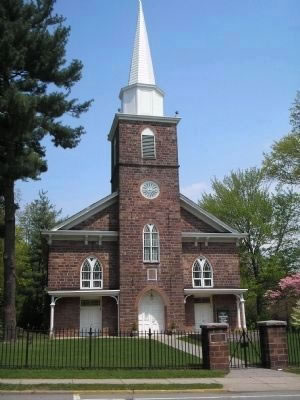
Organized in 1723 as the Schraalenburg Dutch Reformed Church. First church was erected in 1728 about 150 feet to the east of the present structure in built in 1799. The True Reformed Church was founded here in 1822. The church became Presbyterian in 1913. John Henry Goetschius, minister from 1748 to 1774, the principal founder of Queens College (Rutgers), and many Revolutionary War soldiers are buried in the churchyard.
Bogota
Intersection of West Fort Lee Road and River Road
Bogota, NJ 07603
(Photo by
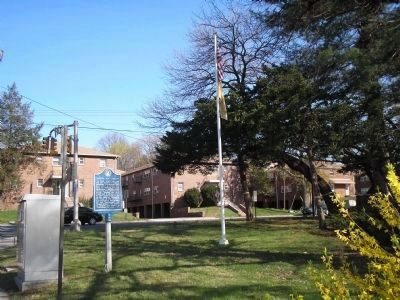
In 1642, when this area was part of New Netherland, Johannes Winckelman built near here a ninety-foot long fur trading post and farmhouse – a building which sheltered both settlers and cattle. During the 1643 Indian war it was protected by five Dutch soldiers but on the night of September 17, 1643, it was attacked and burned to the ground by the Hackensack and Tappan Indians. This section of Bogota was known as “Winkelman” for many years.
Closter
Durie Avenue and High Street
Closter, NJ 07624
(Photo by
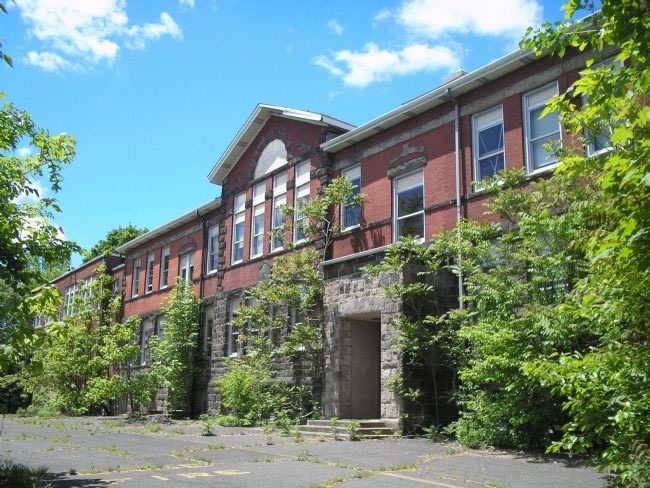
In 1899 the schoolhouse property was bought from the Bloomer family. The following year a two story, square plan, Renaissance Revival style building was completed with 3 classrooms and an assembly room for grades K-8. In 1907, 4 classrooms were added to the south side, and in 1912, 6 classrooms were added to the north side, expanding the school to K-12. In 1921 the south end was again enlarged, and from 1929 to 1955 it was solely the Closter Jr/Sr High School, 7-12. From 1955 to 1996 it was the Village School, grade’s 6-8.
Closter
145 Piermont Road
Closter, NJ 07624
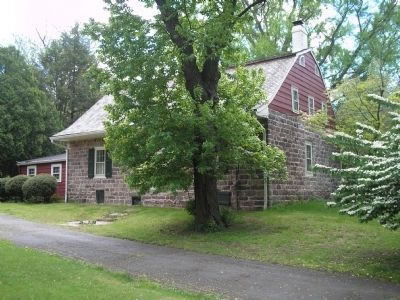
Built about 1786 by Daniel De Clark, the frame kitchen wing was added in the early 1800’s. De Clark operated a large cattle and dairy farm on 170 acres of land. In 1815 son William was the owner and he sold the house to his grandson, Jacob D.C. Outwater, in 1849. Jacob was a farmer who also built and ran a nearby sawmill. The farmhouse passed from the family in 1856. Later it became part of the Palisade Stock Farm.
Closter
West Street
Closter, NJ 07624
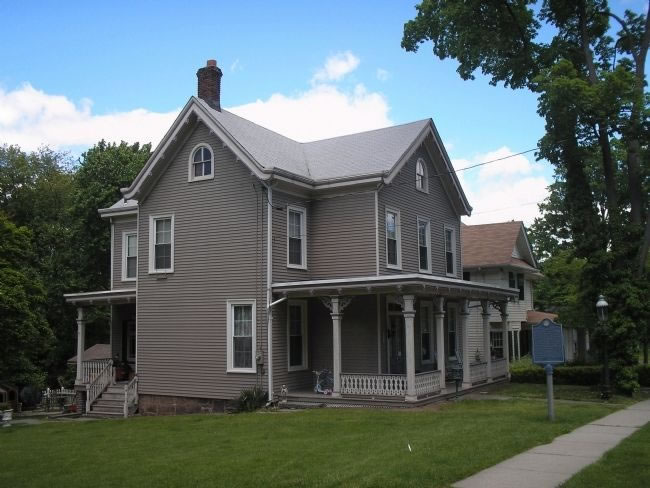
Built in 1871 for Hilderbrant Naugle on a suburban lot near the Closter R.R. depot, the frame gable-front-and wing house is notable for the ornamental scroll work of Gothic design. Naugle was a carpenter and clockmaker who made improvements to his home. He died in 1899 and the residence was occupied by his son Resolvert Naugle, also a carpenter. It was purchased by his son-in-law, William Tate, in 1922 and family ownership ended in 1924.
Closter
West Street and High Street
Closter, NJ 07624
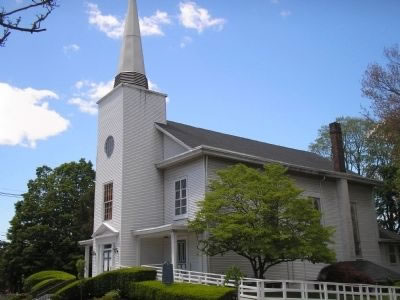
Established as the “Protestant Reformed Dutch Church of Closter City”, it was the first church erected in the Borough of Closter. Dedicated October 7, 1862, tradition says the church was the headquarters of the “Harrington Rifles”, a group of churchmen who drilled here for service in the Civil War. In 1868, the church housed first classroom in present Closter. The building has been enlarged and remodeled over the years.
Closter
Piermont Road and High Street
Closter, NJ 07624
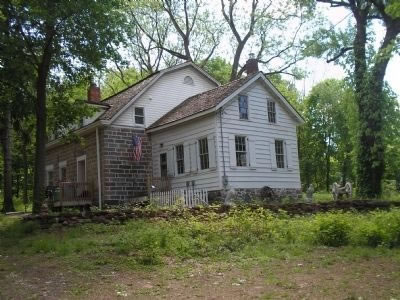
In 1795 Walter Parcells, a mason, erected this house of local stone on 34 acres of land on what was then known as Closter New Road. Built in the Federal style, it is 1½ stories high with a gambrel style roof. The frame wing was added later and another wing, on the west, no longer stands. By 1860 it was known as the Lone Star Tavern run by Cornelia Parcells Vanderbeck. The house remained in the Parcells family until 1961.
Cresskill
County 501 and Westervelt Place
Cresskill, NJ 07626
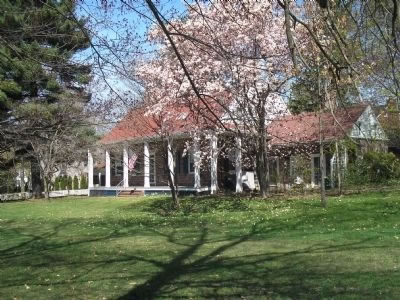
The main wing of this house was built in 1808 by Benjamin P. Westervelt who served in the local militia during the Revolution. The site of this house has been continuously owned by the Westervelt family since early colonial times. General Erskine’s maps show a Westervelt home on this site in 1778. A fine example of the Dutch Colonial style, it served as a background in some early moving pictures.
Cresskill
50 County Road
Cresskill, NJ 07626
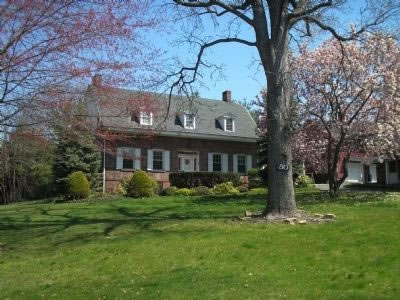
In 1776, a 180 acre farm here was owned by Loyalist John Ackerson. It extended from the Tenakill to the Hudson, bordered on the north by the road used by British invaders that year. Seized as enemy property, it was bought in 1784 by Militia Captain John Huyler. The main wing of this house was built in 1836 by his son, Peter. The stone work is exceptional. The outbuilding of stone was probably a kitchen with quarters for slaves.
Cresskill
Madison Avenue and Knickerbocker Road
Cresskill, NJ 07626
In memory of those soldiers who gave their lives for their country while on duty in Camp Merritt. This monument marks the center of the camp and faces the highway over which more than a million American soldiers passed on their way to and from the World War 1917-1919. Erected by the State of New Jersey, the County of Bergen, The Bergen County Historical Society, Officers and men of Camp Merritt. Many patriotic citizens and the Camp Merritt Memorial Association.
Demarest
Park Street
Demarest, NJ 07627
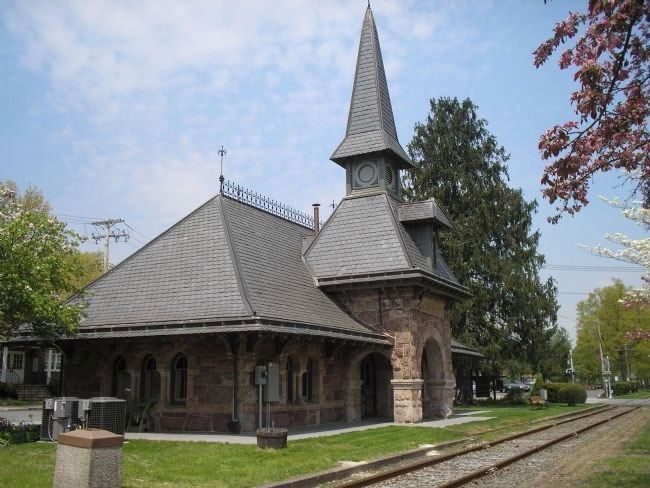
Built 1872 at “Demarests Station” on the Northern Railroad of New Jersey. Designed by noted architect J. Cleveland Cady, it was considered the “handsomest on the line.” The depot was built of Palisades stone quarried on the Demarest farm. The station was named for State Senator Ralph S. Demarest, a director of the railroad, and his family, who owned the land. The Borough took the name when incorporated in 1903.
Dumont
180 Washington Avenue
Dumont, NJ 07628
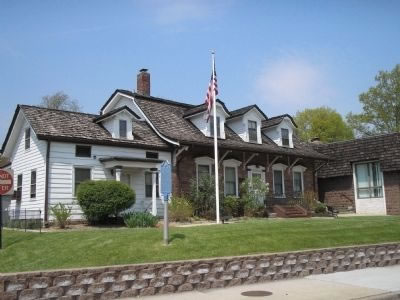
This example of Dutch Colonial architecture was built between 1780-1790 by Derick Banta, soldier in the American Revolution, after his birthplace here was burned by Tories. Owned by the Quackenbush family from 1792, it was sold to Isaac Dixon in 1862, whose son Robert was Dumont’s fourth Mayor. In 1929 Miss Sarah Dixon devised the homestead to the town for a public library.
Dumont
Washington Avenue and Madison Avenue
Dumont, NJ 07628
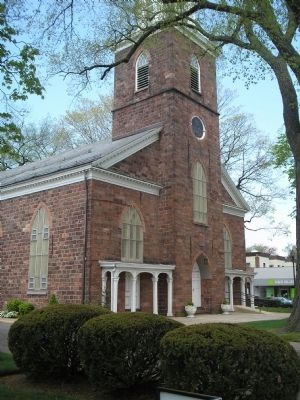
Organized in 1723 as the Schraalenburgh Reformed Dutch Church. First church was built in 1728. In 1801 the present Old North Reformed Church was built, one mile north of first site, and continues as a Reformed congregation. This sanctuary is considered one of the finest examples of early American church architecture. Its churchyard is the resting place of many Revolutionary War soldiers.
Edgewater
Binghamton Way
Edgewater, NJ 07020
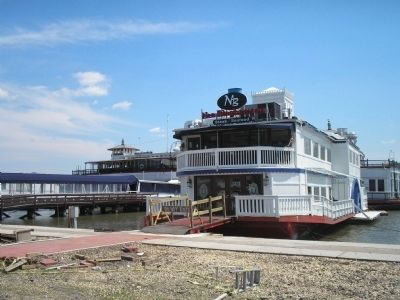
Built for the Hoboken Ferry Company and launched in1905, it plied the Hudson River between Hoboken and Manhattan (Barclay St.) for 62 years. This double-ender steamboat was designed to carry 986 passengers and a number of vehicles. It was in operation until 1967 when all ferry service on the river ceased. Moored here in 1975, the Binghampton was converted to a restaurant. The vessel was placed on the National Register of Historic Places in 1982.
Elmwood Park
891 River Drive
Elmwood Park, NJ 07407
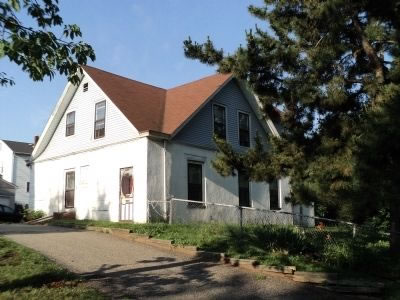
Built c. 1782 by Cornelius J. Van Houten as an addition to the earlier house of his father, John C. Van Houten. Located in “Slotterdam”, the farm stretched between the Passaic and Saddle Rivers and was raided during the Revolutionary War by the British in 1776. Later owned by the Cadmus and Brooks families, it was purchased in 1888 by Herman Hillman. In 1901 he remodeled the homestead which he and his descendants have owned for five generations.
Englewood
Engle Street
Englewood, NJ 07631
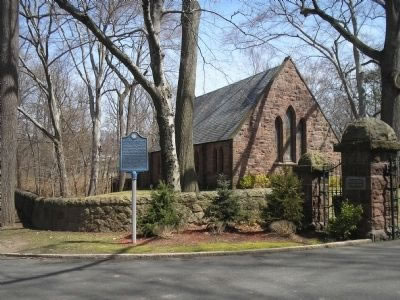
Built in 1860 on Palisade Avenue as “The Englewood Presbyterian Church”, it was the first church established in the city. A new, larger church was built on the original site and the old building was taken down, stone by stone, and re-erected at Brookside Cemetery about 1877. The sandstone church, later known as the “Chapel”, is in the Gothic Revival architecture. Brookside Cemetery was established in 1876.
Englewood
285 Grand Avenue
Englewood, NJ 07631
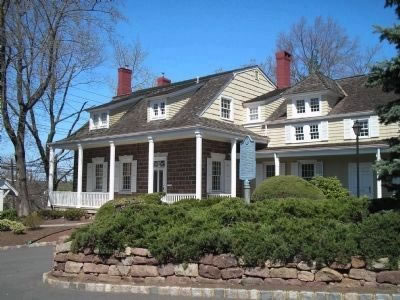
Built about 1808 by Henry DeMott, this sandstone Dutch Colonial house was once attached to the pre-Revolutionary homestead of Albert Lydecker. Material from the older house used in the present frame wing built c. 1810 by Peter Westervelt. The Westervelt family owned the homestead until 1936. Adjacent Dutch Barn is an adaptation of the European “bouwhuys”, or farmhouse, where men and cattle lived under one roof.
Englewood
484 Tenafly Road
Englewood, NJ 07631
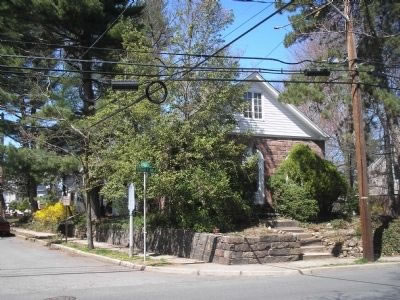
This former school was originally built in 1818 near the Liberty Pole Tavern. In 1850 it was moved here and rebuilt with the original materials. This part of Englewood was then known as Highwood. The name Englewood School was adopted in 1897. It continued to be used as a school until the close of the century.
Englewood
150 East Palisades Avenue
Englewood, NJ 07631
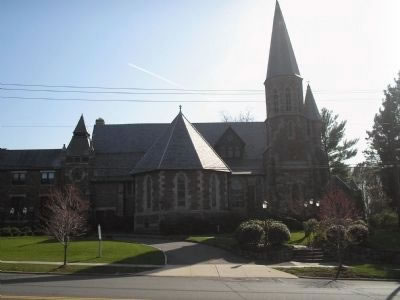
Organized in 1860 as “The Englewood Presbyterian Church”, the first edifice was erected on this site in the same year. It was the first church building in Englewood and the first Presbyterian congregation in Bergen County. Today’s structure was built in 1870 in Victorian Gothic style of architecture. Over the years the church has been enlarged and remodeled.
Englewood
Grand Avenue and Tracey Place
Englewood, NJ 07631
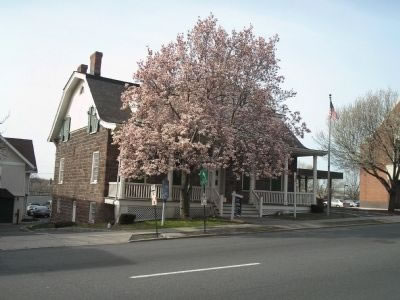
Built c. 1800 by John G. Benson, a farmer, and from 1794 to 1797, a captain in the militia. This house, an example of post-Revolutionary War Dutch Colonial architecture, was built on property confiscated by New Jersey from the Reverend Garret Lydecker, a Tory during the American Revolution.
Englewood
113 Engle Street
Englewood, NJ 07631
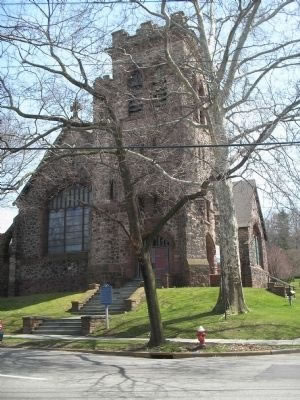
Organized in 1865, the congregation first met in homes and in the armory on Van Brunt St. The original church was built in 1866. The present chapel was erected in 1895 as a parish hall. Today’s Gothic church structure, built in 1899, has the rose limestone of the original building in its foundation. The stained glass are from Tiffany, La Farge, and Lamb Studios.
Fair Lawn
Saddle River Ave & Dunker Hook Road
Fair Lawn, NJ 07410
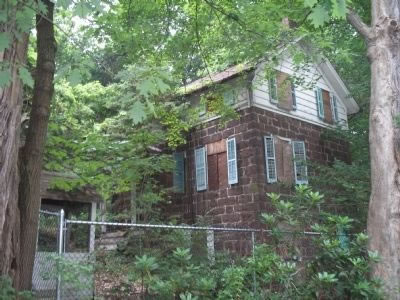
Although labeled as Naugle House this colonial home was built in the 18th century by Jacob Vanderbeck in the 1740/50's. The Vanderbeck Family owned much of the land in the area at the time. Naugle may have lived there one time and he was said to have been a paymaster in Layayette’s Light Division. The house served as a landmark on many Revolutionary War maps. It is believed that Lafayette visited here in 1824.
Franklin Lakes
1095 Franklin Lake Road
Franklin Lakes, NJ 07417
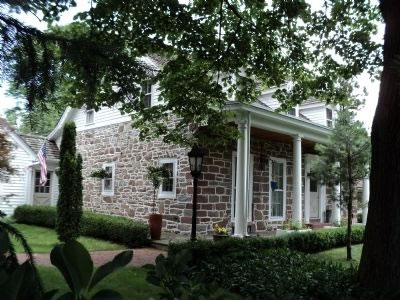
Built about 1793 by James A. Ackerman on land owned by the family since 1727. The farm was then in the locality known as Ponds Neighborhood and within the old Township of Franklin. In 1841 the house was purchased by Adam Boyd who farmed the land and was also a noted lobbyist at Trenton. The farmhouse was owned by Boyd heirs until 1901 and has been remodeled over the years.
Franklin Lakes
Pulis Avenue and Mabel Ann Avenue
Franklin Lakes, NJ 07417
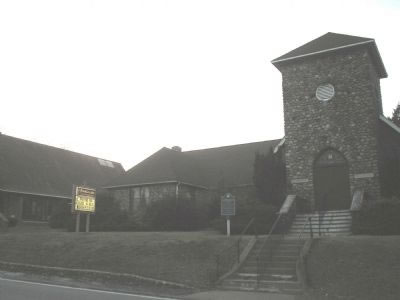
Organized in 1855 as the Methodist Episcopal Church of Campgaw, the first church was built on Circle Ave, in 1856, but was destroyed by fire in 1919. William V. Pulis donated a lot ‘in a most commanding part of the village.’ and the stone church was completed in 1921, built of rocks from the farmers’ fields. For many years the only church to serve the community, the new sanctuary was added in 1968 to serve the growing congregation.
Glen Rock
724 Ackerman Avenue
Glen Rock, NJ 07452
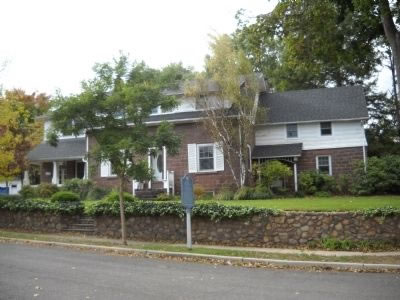
North wing built 1780 by Hendrick H. Hopper in area then called “Small Lots”. Center section erected by son John, in early 1800’s. The farmhouse was sold to the Hillmann family in 1895, ending four generations and 115 years of continuous Hopper ownership.
Glen Rock
470 Prospect Street
Glen Rock, NJ 07452
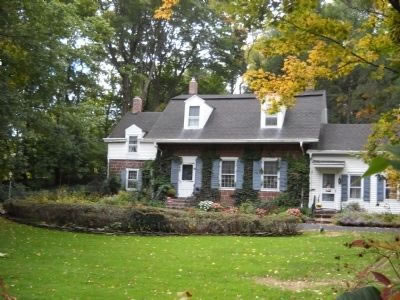
Located in “Small Lots”, Henry G. Hopper began the construction of this house about 1788 on a 120 acre farm. Son Garret erected the Dutch-style main house in the early 1800’s. The north frame wing was built in the 1850’s for his son Thomas who inherited the homestead in 1872. His son, Garret T., was a Glen Rock founder and councilman. He sold the house in 1897 after more than a century of family ownership.
Glen Rock
Rock Road and Ackerman Avenue
Glen Rock, NJ 07452
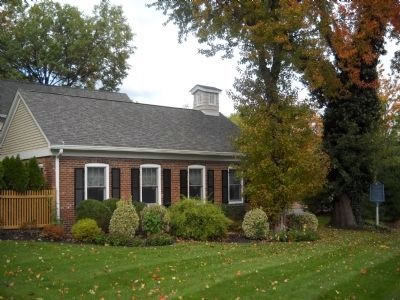
This former one room Schoolhouse was the original Ridgewood Grove School Number 44. Built in 1846 it was used until 1894 by Ridgewood Township. In 1894 the proposed closing of this school resulted in the incorporation of the Borough of Glen Rock. It served this area as a school until March 8, 1900.
Hackensack
Court Street and Church Street
Hackensack, NJ 07601
Earliest records of this pioneer Dutch church, dated 1686, mark it as the second oldest in New Jersey. Old stones embedded in the east wall show the initials of founding families and first settlers. The old burying ground contains the grave of General Enoch Poor, a Revolutionary officer. His funeral was attended by Generals Washington and Lafayette and a portion of the American army.
Hackensack
120 Atlantic Street
Hackensack, NJ 07601
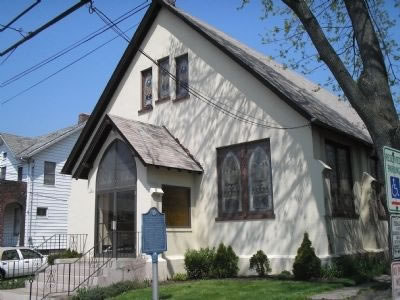
First African American Church in Hackensack. Organized in 1864 as “Olive Branch Colored Mission Number Three of Hackensack.” First church was an old lime shed moved here in 1867. In 1917 current name was adopted in honor of the first Bishop of the A.M.E. Zion Church, Bishop James Varick. The present sanctuary built in 1919.
Hackensack
14 Washington Place
Hackensack, NJ 07601
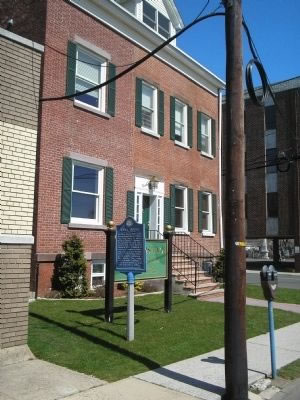
Erected about 1831 by the Washington Banking Company. The first bank in present Bergen County, it opened in the nearby Mansion House in 1825-26. After the bank failed in 1833, it housed the offices of prominent lawyers and judges. Later the home of the “New Jersey Citizen”, a newspaper published in the 1870’s. The original Federal style building was enlarged by additions to the side and rear in 1909.
Harrington Park
622 Lafayette Road
Harrington Park, NJ 07640
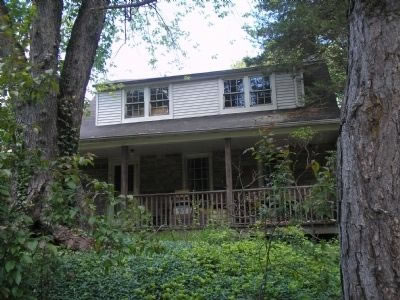
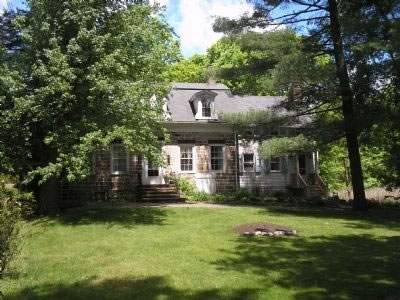
The house and the kitchen wing were built about 1801 by Abraham D. Blauvelt who farmed the land. It came into possession of his niece, Catherine Blauvelt, wife of Richard J. Blauvelt, and remained in the family until 1891. In 1904 Herman Steinhoff, a later owner, established the Rosewood Nursery which was continued by Freidrich and Karl Weiss when they purchased the premises in 1943. The Federal Period house was remodeled over the years.
Harrington Park
341 Lafayete Road
Harrington Park, NJ 07640
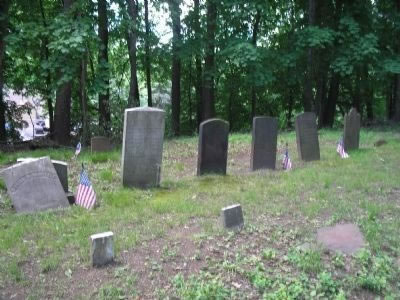
Homestead of Isaac Blanch from about 1758 and site of his grist mill, both inherited in 1767 from his father, Richard Blanch, a native of England. Isaac was a Patriot official and member of the State Assembly during the Revolutionary War. He was taken prisoner by Tory raiders early in 1777 and jailed in New York until exchanged late that year. Property sold about 1788 to David Haring whose family owned it for the following century.
Harrington Park
Tappan Road and Arcadia Court
Harrington Park, NJ 07640
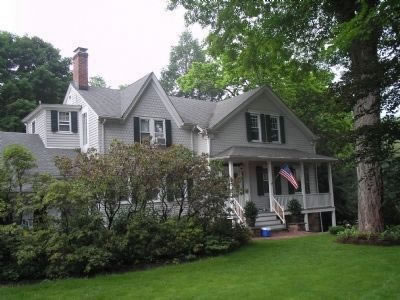
In use for nearly two hundred years, largely by the Blauvelt family, the earliest known burial was in 1722. The cemetery contains the graves of members of other early Bergen County families, veterans of the American Revolution and slaves. Some of the tombstones are inscribed in Dutch.
Harrington Park
11 Harriot Avenue
Harrington Park, NJ 07640
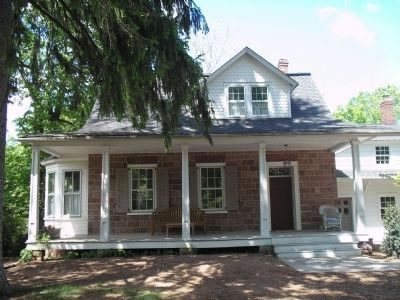
Frederick Wortendyke owned this land in 1723. It was once part of a large grant called the Tappan Patent. His son Jacob, who owned the homestead during the Revolutionary War, was taken captive in one of many British raids made in the area. Later owners included members of the Blauvelt, Demarest and Herring families. The house, rebuilt over the years, is now a combination of eighteenth and nineteenth century architecture.
Haworth
371 Schraalenburg Road
Haworth, NJ 07641
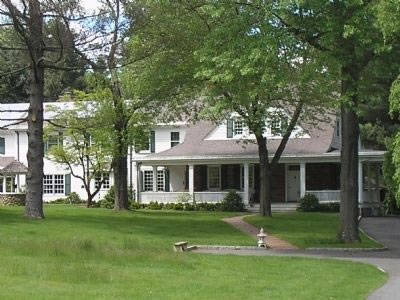
An early 19th century example of Dutch Colonial architecture erected by Garret J. Durie on part of the estate of his father, John Durie. Garret J. Durie was a farmer whose 120 acre tract stretched eastward one mile to the Tenakill Brook. Located in what was once known as Schraalenburg, the house was occupied by Durie heirs – the Westervelt and Mount families – until 1946.
Haworth
317 Massuchesetts Avenue
Haworth, NJ 07641
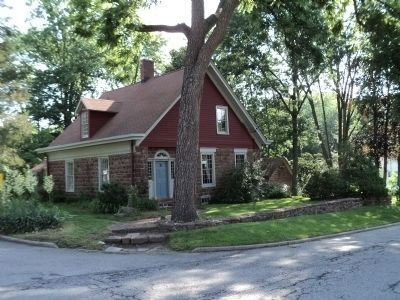
Built 1818 by Garret H. Zabriskie on land his father Henry purchased in the 18th century. Garret's farm consisted of 219 acres. It began on Schraalenburg Road and ran westward for one mile. Later owned by son John G. Zabriskie who sold it to his grandson John H. Christie in 1894. Christie, one of Haworth’s first councilmen, enlarged and remodeled the house. It was sold in 1936 after 118 years of Zabriskie-Christie ownership.
Hillsdale
156 Ell Road
Hillsdale, NJ 07642
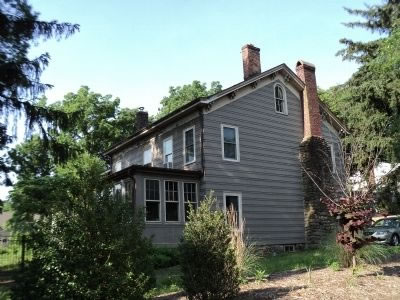
Located in “Pascack” on land inherited from his father, Garret Durie built this house about 1767. During the Revolutionary War, the house was plundered by both American and British armies. Durie was a farmer and a blacksmith as well as a Bergen County Freeholder, Justice and Judge. The house, later enlarged, was inherited by his daughter and through her passed to the Terhune and Hopper families.
Hillsdale
Hillsdale Avenue
Hillsdale, NJ 07642
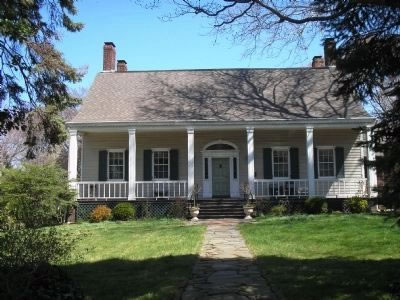
About 1756 Peter Westervelt built a small house, enlarged in 1785, on land of his wife Catlyntje Haring. During the Revolutionary War the farm was raided. Later it was owned by son Henry and his son Aaron, a Freeholder and State Assemblyman. Purchased in 1860, he built the addition in Italianate style of the north side of the old house. Alterations were made over the years. A later owner was William W. Livengood, Mayor of Hillsdale in 1930.
Leonia
125 Lakeview Drive
Leonia, NJ 07605
Located in old English Neighborhood on land purchased by Dirck Vreeland before the Revolution, the homestead stretched between the Hudson River and Overpeck Creek. The stone wing of this house was built about 1786 and later was remodeled. Son Michael D. Vreeland added the main Dutch style house about 1815 which is noted for its Federal decorative detail. It remained in the Vreeland family until 1928.
Lyndhurst
400 Riverside Drive
Lyndhurst, NJ 07071
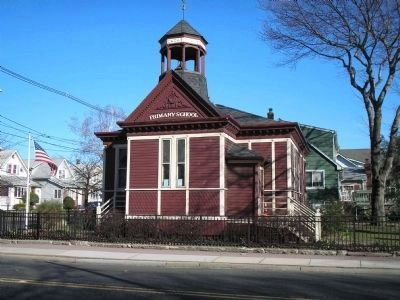
The first schoolhouse was built on this site in 1804. Located in what then was called New Barbadoes Neck, the land was donated by Jacob Van Winkle “for the sole purpose of erecting a School House”. In 1849 it was replaced by a two-story building. The present one-room school, with Queen Anne style cupola, was built in 1893. It continued to be used as a Lyndhurst school until 1978.
Mahwah
398 Ramapo Valley Road
Mahwah, NJ 07430
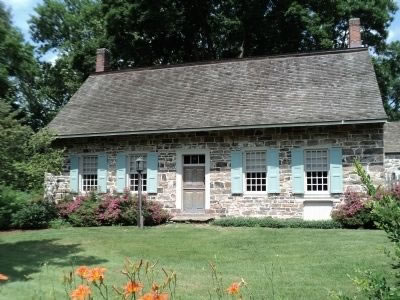
Located in “Ramapough” near the site of an Indian trading post, this Dutch Colonial house was built about 1750 by Jacobus Laroe. The small wing was added at a later date, the porch about 1840. Some later owners were Jacobus Bogert who had a tavern here; John Haring, a member of the Continental Congress; the Hopper family and Abraham Van Horn, a Bergen County Freeholder and New Jersey Assemblyman.
Mahwah
Old Station Lane and Ramapo Avenue
Mahwah, NJ 07430
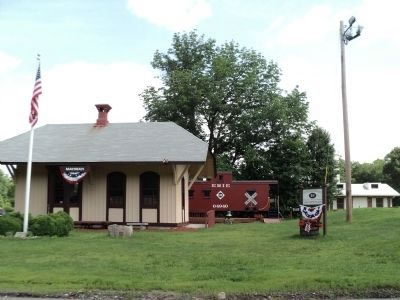
Built in 1871, the building served until 1902 and was moved from original site when four tracks were laid and grade crossing closed. Bought by A.J. Winter, it was used as a storehouse for fifty years. To preserve the landmark, The Mahwah Historical Society was founded in 1965 and the station removed to present site in 1967. Completely restored, it was dedicated as a town museum on Sept. 22, 1968 by Gov. Richard Hughes.
Montvale
280 Chestnut Ridge Road
Montvale, NJ 07645
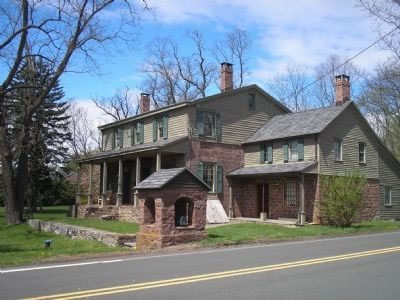
Built in the 1790’s by Jacob Eckerson near an earlier home where he had settled about 1770. The farmstead then consisted of 119 acres. The house was inherited by his son John J. Eckerson in 1810 who owned it until 1870 when purchased by James Ledwith. The frame second story was added in the 1890’s. John Foxlee bought the house and farm in 1917 and it was occupied by that family until 1971.
New Milford
147 River Edge Avenue
New Milford, NJ 07646
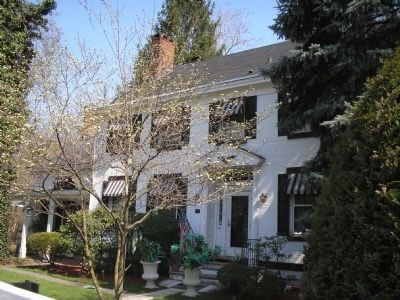
Built about 1840 in the Greek Revival Style of architecture by John C. Demarest. He was a farmer with an interest in river trade when schooners plied the Hackensack River. The house was purchased in 1864 by George Bloomer, a dealer in coal and lumber, and his family owned it until 1928. This locality was known at different times as Demarest’s Landing, Bloomer’s Landing, and Old Bridge.
New Milford
618 River Road
New Milford, NJ 07646
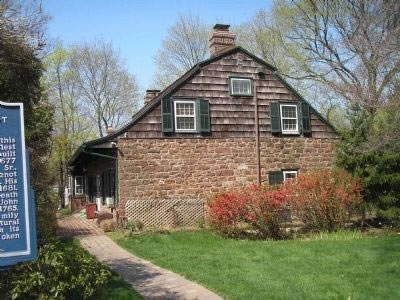
The earliest part of this house, one of the oldest in the county, was built on land purchased in 1677 by David Demarest, Sr., founder of the Huguenot Colony in Bergen County. His grandson Jacobus, born 1681, lived here until his death in 1763. Jacobus’ son John completed the house in 1765. It remained in the family until 1850. An architectural feature surviving from its early days is its unbroken gambrel roof.
Northvale
9 Piermont Road
Northvale, NJ 07647
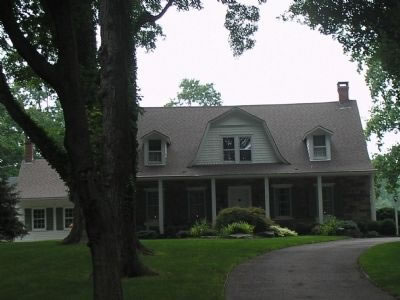
Erected on a 200 acre farm by Abraham A. Haring, a captain in the Bergen County Militia. During the Revolutionary War, Haring was captured by the British and imprisoned in New York City where he died. In 1805 his grandson, Abraham D. Haring, sold the house to Moses Taylor, Jr., who built the frame kitchen wing about 1812. Taylor’s descendants owned the house until 1902.
Northvale
5 Piermont Road
Northvale, NJ 07647
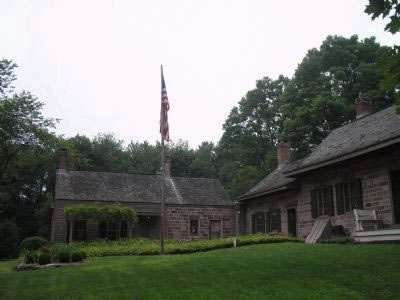
An early 19th century example of Dutch Colonial architecture erected by John A. Haring. Small wing added c. 1808; rear stone section built by a Haring about the time of the Revolutionary War.
Oakland
Franklin Avenue and Ramapo Valley Road
Oakland, NJ 07436
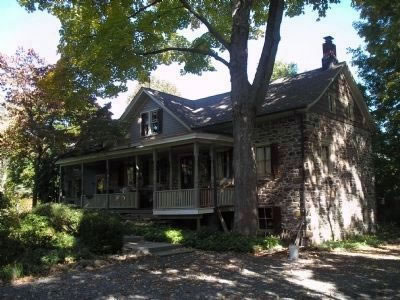
This Dutch Colonial house was built by Hendrick Van Allen before the Revolutionary War on a farm that consisted of over two-hundred acres. General George Washington used this house as his Headquarters on July 14-15, 1777, when he moved his troops over “extremely deep and miry roads” from Morristown, New Jersey to Smith’s Clove, New York.
Oakland
3 Dogwood Avenue
Oakland, NJ 07436
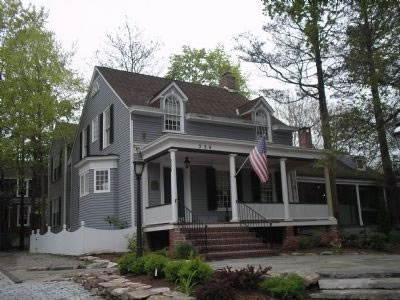
Built about 1789 by Jacobus S. Demarest, the frame wing was added later. Demarest served in the Revolutionary War. Over the years his farm grew to 180 acres. In 1835 his son, Daniel J. Demarest, inherited the farmhouse. In 1863 it passed to his daughter, Letty Ann, and in 1894 to her son Daniel J. Fox. Daughter Irene Fox Munzinger was the last of the Demarest line to occupy the house after 194 years in the family.
Oradell
234 Kindermack Road
Oradell, NJ 07649
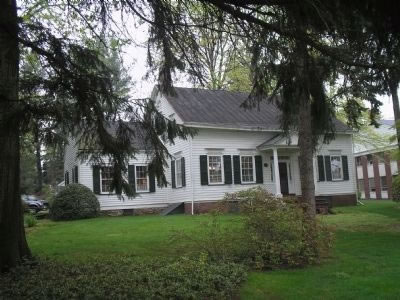
Built about 1825 by Richard Teunis Cooper, a chairmaker, on land owned by the family since 1716. This Federal style house, once on a 22 acre farm, is in the Oradell locality formerly known as New Milford. Son John R. Cooper, a master blacksmith, sold the homestead in 1866 and entered the ministry. Later owners have made additions and remodeled the interior of the house.
Oradell
467 Kinderkamack Road
Oradell, NJ 07649
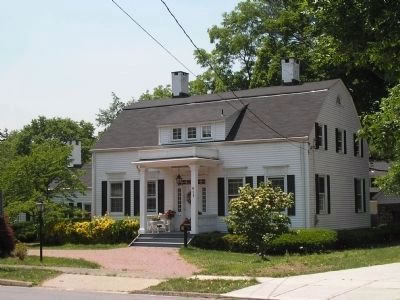
Small wing built by Abraham J. Van Buskirk about 1820 from earlier c. 1789 house. Federal style main wing built c. 1832-34 for Fanning T. Oakley and wife Hetty Van Buskirk. Later owned by son Abraham V. B. Oakley and wife Eliza Voorhis; their daughter Margaret Hoyt acquired the house in 1900. It remained in the family until 1978. The 211 acre farm in “Kinderkamack” once stretched from the Hackensack River to Paramus.
Paramus
617 Paramus Road
Paramus, NJ 07652
Built c. 1826, this house combines the Federal style of architecture with that of the earlier Dutch Colonial. Erected by Jacob J. Zabriskie on the site of an earlier home, the farmhouse remained in the Zabriskie family for 132 years.
Paramus
224 Spring Valley Road
Paramus, NJ 07652
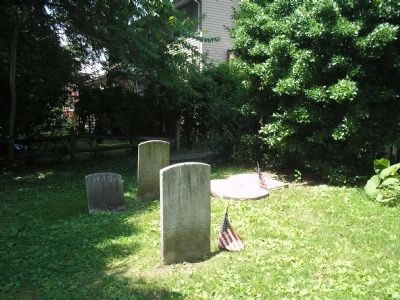
The historic cemetery directly in the rear of the Behnke farm contains the graves of descendants of early settlers in this area including a least two local farmer-militiamen of the American Revolution, Jacobus Brouwer and Henry Banta, as well as the grave of Cornelius Demarest, who served in the 22nd regiment of the Union Army during the Civil War.
Paramus
239 W.Midland Avenue
Paramus, NJ 07652
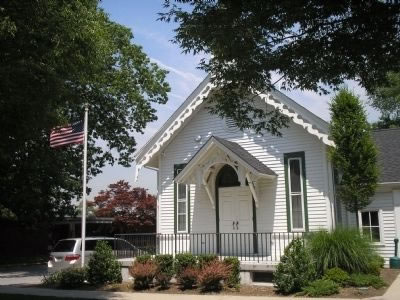
This sturdy old frame building is a landmark in the community, having served Paramus residents in various ways. Originally School No. 26 of Midland Township, it was converted into a borough hall when Paramus Borough was formed in 1922. In 1959 it became the main quarters of the Paramus Free Public Library 83 years after it had been erected.
Paramus
Paramus Road
Paramus, NJ 07652
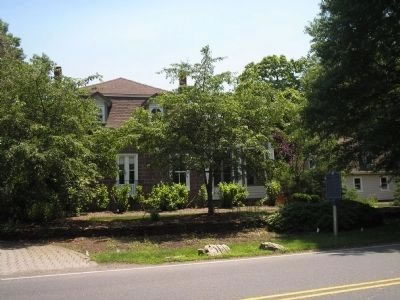
Built by Jacobus Rutan, a farmer, on 32 acres of land about 1794-95. In 1800 his widow and son sold the house to Cornelius H. Zabriskie, a blacksmith and farmer. In 1856 he deeded the house to his grandson, Cornelius Zabriskie Terhune, also a farmer. The property was sold in 1869 to Rebecca S. Bidwell, wife of John A. Bidwell who farmed the land. They remodeled the house, including a new roof in the French mansard style, popular at the time.
Paramus
375 Paramus Road
Paramus, NJ 07652
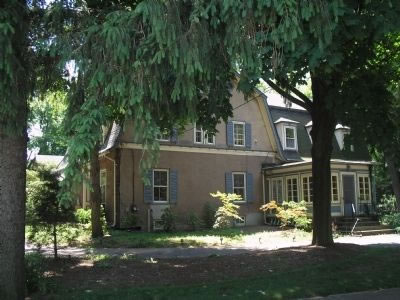
Built on the farm of his grandfather, Christian J. Zabriskie, who bought the property in 1775. Tradition places a house on the site in 1792 but the present stone dwelling was probably built in the early 1800’s and occupied by Stephen T. Zabriskie. It was later owned by his son, Thomas V. B. Zabriskie, who added the frame wing in the 19th century. The house has been greatly altered over the years.
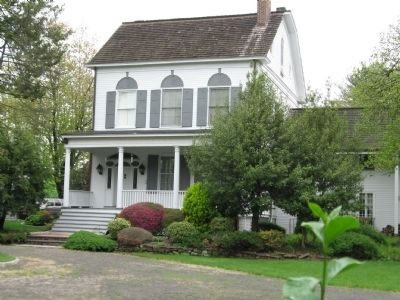
Paramus
218 Paramus Road
Paramus, NJ 07652
Pre-Revolutionary homestead of David Terhune (1713-1792), weaver and patriot official who served as Freeholder from New Barbadoes Township 1779 to 1785; and of his son, John D. Terhune, a Freeholder in 1787. Farm raided by British four times during Revolutionary War. From 1807 the country estate of Thomas T. Gardner, gentleman, of New York City, who erected large north wing about 1808. owned by the Gardner family until 1907.
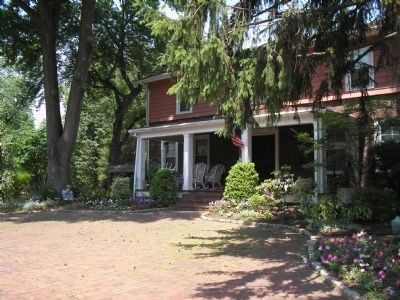
Paramus
109 Paramus Road
Paramus, NJ 07652
Built about 1795 by Henry S. Terhune in “Old Paramus” on land owned by the Terhune family since 1707. the two-hundred acre farm extended for over a mile between the Saddle River and Sprout Brook. In 1853 the house was inherited by Terhune’s grandson, John Zabriskie Van Dien, and was owned by his family for three generations. Alterations to the farmhouse have been made over the years.
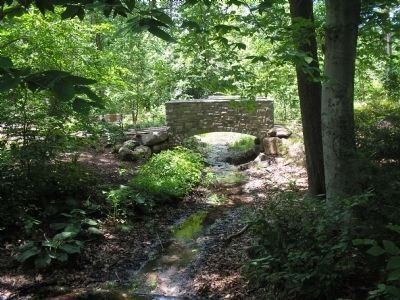
Paramus
Van Saun County Park, Washington Gardens
Paramus, NJ 07652
General George Washington is believed to have taken a drink from this spring on September 13, 1780, after reviewing his troops. With him were six local Indian chiefs who attended the ceremony.
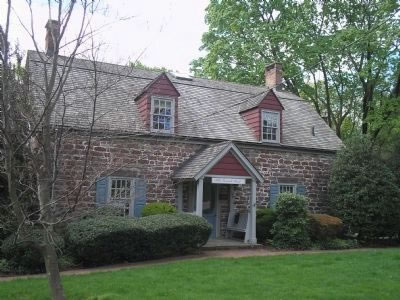
Park Ridge
142 Pascack Road
Park Ridge, NJ 07656
Built about 1800 by John Ackerson and son Garret, this stone house stands on land purchased in 1759. The property was developed during a century of family ownership. A general store was built opposite the house site in 1777 and successive generations built a distillery and a woolen mill beside the Pascack Brook. In 1857 the homestead was sold to Levi Gurnee who also operated the general store for forty years.
Park Ridge
19 Ridge Avenue
Park Ridge, NJ 07656
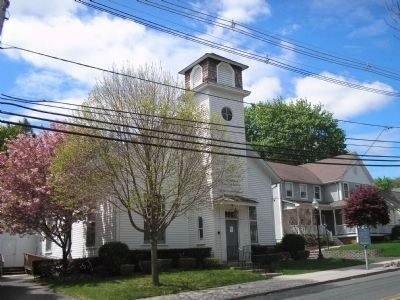
This building, dedicated December 8, 1873 by Rev. Henry Ward Beecher, was built through the efforts of James Leach, James Hall and Jacob, his son, for use as a Sunday school and mission chapel. In 1875 it became a Congregational Church. The first local library was founded here. The building was acquired by the Pascack Historical Society in 1852 for its headquarters and a museum founded by John C. Storms.
Park Ridge
Pascack Road and Sulak Lane
Park Ridge, NJ 07656
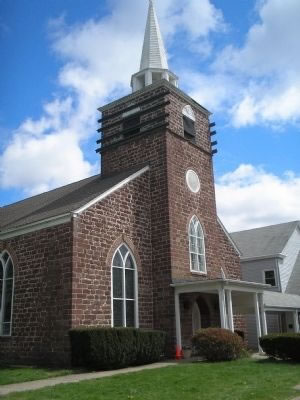
Erected in 1813 on farmland purchased from the Campbell and Wortendyke families, the church had thirty-six original members. Dedicated in the Fall of that year by Dominie Stephen Goetschius, the first pastor, who called it a “beautiful and well-proportioned” House of God. Built of local sandstone and timber, the labor was performed by members from Pascack and Saddle River, where a joint pastorate existed until 1854.
Park Ridge
Pascack Road
Park Ridge, NJ 07656
This pre-Revolutionary Dutch barn was built by the Wortendyke family. Once common in the Hudson River area, the barn is one of the few remaining in this country. Broader than deep, the structure is entirely supported by four H-frames tied with massive anchor beams. Front and rear wagon doors permit through access to the threshing floor, which is flanked by side aisles for animals.
Park Ridge
12 Pascack Road
Park Ridge, NJ 07656
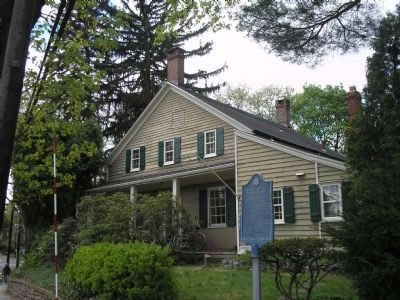
Frederick Wortendyke, Jr. built the original sandstone section of this farmhouse in the 1750’s. Located at “Pascack” on land purchased by his father in 1735, the tract included nearly a third of present-day Park Ridge. The homestead was enlarged before 1775 and was further expanded and remodeled over the years. It remained in the Wortendyke family until 1851.
Ramsey
37 W. Crescent Avenue
Ramsey, NJ 07446
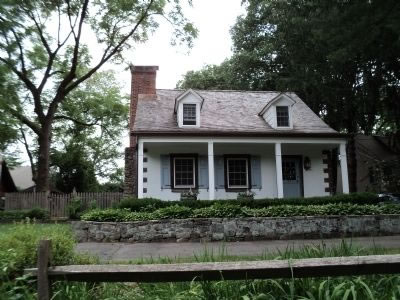
Built by David Van Gelder after his marriage in 1794. Located in the area once called “Brabant”, the land was purchased twice – c. 1737 and 1745 – by grandfather Abraham to insure valid title from the proprietors of East New Jersey. It included most of nearby Van Gelder’s Pond. Inherited by David’s son Abraham B. in 1845, he willed it to his sister Pernelphe, a farmer, in 1876. The house remained in the Van Gelder family name until 1884.
Ridgefield
1040 Edgewater Avenue
Ridgefield, NJ 07657
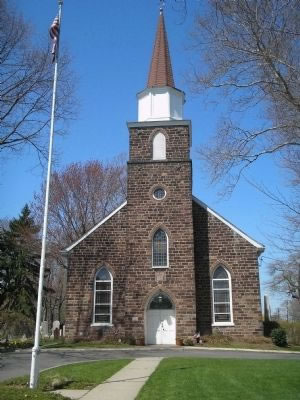
Organized in 1770 as a Dutch Reformed Church, the first building, erected in 1768, was located in Leonia. After the Revolution, it was decided to “Erect a New One in A more Proper Place”. In 1793 the present church was built on the farm of Cornelius Vreelandt in the locality once known as the “Point”. Stone from the first building was used in construction of this church which has survived without major alteration.
Ridgefield Park
8 Homestead Place
Ridgefield Park, NJ 07660
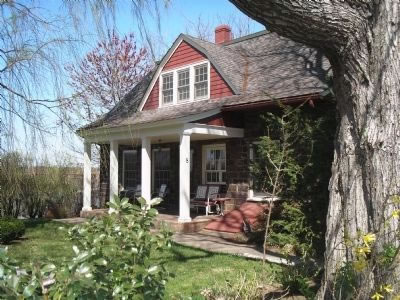
Built about 1775 by John Paulison who owned 150 acres in what was then known as “Old Hackensack”. The farm was raided by the British during the Revolutionary War. In 1826 the house was inherited by his son Paul Paulison. Purchased in 1844 by David Christie for his son Albert Brinkerhoff Christie. The farmhouse remained in the Christie family for 140 years and has seen additions and alterations over the years.
Ridgewood
W. Ridgewood Avenue
Ridgewood, NJ 07450
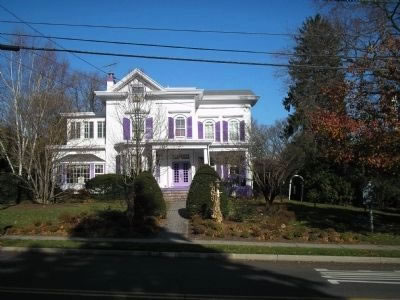
Built about 1869 in the late Italianate style of architecture, it was the summer home of Joseph H. Chapman who was a Wall St. insurance agent. In 1868 a group of investors laid out streets and house lots and named the development Ridgewood Park. As it was convenient to the Erie R. R. station, the area attracted commuters who contributed to the growth of Ridgewood. The house exterior has had few changes over the years.
Ridgewood
E. Glen Avenue
Ridgewood, NJ 07450
Organized in 1725 by pioneer Dutch settlers, the congregation of this church has worshipped here over 240 years. First church, built 1735 on this land given by Peter Fauconier, a French Huguenot, was a headquarters of Gen. George Washington in 1778 and 1780. During the American Revolution it was used as a barracks, hospital and prison. Present structure, a model of Dutch Colonial architecture, was completed in 1800 using stones from the original church.
Ridgewood
650 Glen Avenue
Ridgewood, NJ 07450
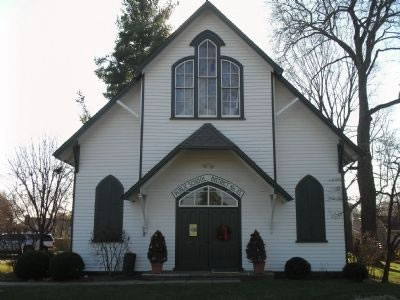
Built in 1872, this school is believed to be the fifth one erected on Paramus Reformed Church ground. From 1730 to the 1870s, education was carried on by the church. Rented to Ridgewood Township, it became District School No. 45 from the 1870s to 1905. Since April 23, 1955 it has housed the museum of the Paramus Historical and Preservation Society.
Ridgewood
629 Grove Street
Ridgewood, NJ 07450
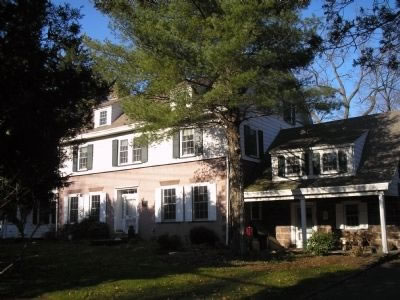
Located on property purchased by Garret Van Dien about 1713, this house was built by a descendant, and is a combination of 18th and 19th century architecture. It has been enlarged over the years and remained in the Van Dien family until 1900.
River Edge
1201 Main Street
River Edge, NJ 07661
201-343-9492
Historic listing preserved from the original NJTGO Bergen County historic places directory.
River Edge
Main Street
River Edge, NJ 07661
Willem Campbell built this house in April 1774 in New Milford. He and his wife raised 9 children in the house, four of the sons going on to serve in the Bergen Militia during the Revolutionary War. The house was moved to this location on September 27, 1977.
River Vale
River Vale Road & Red Oak Drive
River Vale, NJ
201-336-7267
Burial site in memory of American soldiers killed during the Revolutionary War in the "Baylor Massacre" on September 28, 1778. Lt. Col. George Baylor's 3rd Regiment of Continental Dragoons took quarters for the night on several nearby farms. Tories betrayed their presence to a British force, who surrounded the Dragoons during the night. A number of Americans were killed or wounded after they had surrendered.
River Vale
725 Rivervale Road
River Vale, NJ 07675
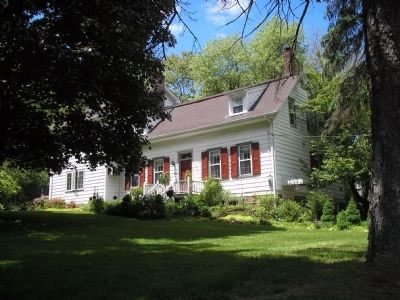
Built about 1828 by David C. Blauvelt on land he purchased in 1801. The 37 acre farm was situated in the locality once known as Overkill Neighborhood. David was a blacksmith and after his death, son John D. Blauvelt bought the homestead in 1842. He sold it in 1882 to Margaret Leah, wife of George H. Seaman, and the house remained in the family until 1918.
Rockleigh
Rockleigh Road
Rockleigh, NJ 07647
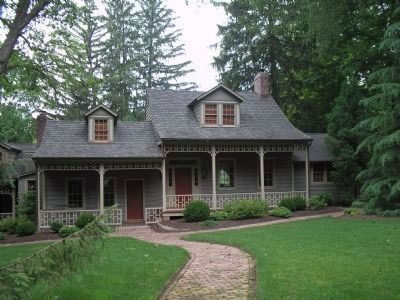
Erected by Joseph Dubois in the locality once known as Rockland Neighborhood. South wing built in 1835, with materials from 18th century house of John Gesner. Center section built soon after with Victorian porch and north wing added at a later date. Barn erected 1836. Dubois was a Hudson River “boatman” and owner of a sloop operating from nearby Snedens Landing.
Saddle River
136 Chestnut Ridge Road
Saddle River, NJ 07458
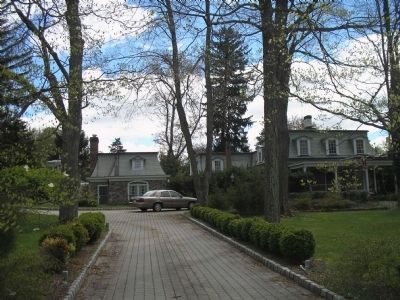
Built circa 1802 by Abraham P. Ackerman who added stone kitchen wing soon after. Later, son William built frame unit. His son Abraham W., owner in 1875, remodeled house and added mansard roofs. The farmhouse remained in the Ackerman family until 1880. Homestead property lines became present roads – Woodcliff Lake Road in 1811 and Chestnut Ridge Road in 1825.
Saddle River
139 W. Saddle River Road
Saddle River, NJ 07458
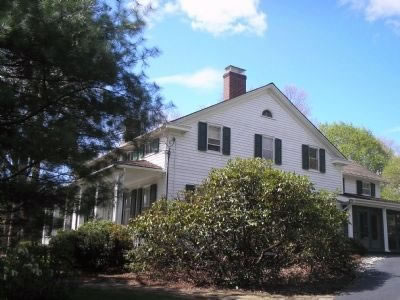
Built around 1835 in the Greek Revival style, it incorporates parts of a late 18th c. home. John D. Ackerman was a miller and his son, David I., was a blacksmith who built a trip hammer forge on the Saddle River opposite the house. His grandson, David Ackerman Pell, was sheriff and surrogate in the late 1800’s. David Ackerman Pell, 2nd, inherited the property and was mayor of Saddle River for many years.
Saddle River
East Saddle River Road and Lake Street
Saddle River, NJ 07458
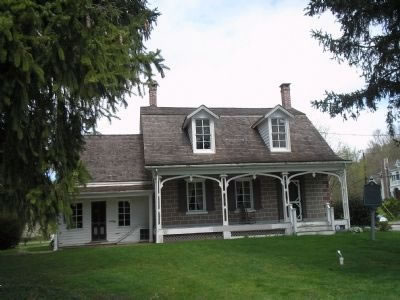
Abraham Hopper built a “new stone house” here (the west wing) in 1739, according to surveyor Charles Clinton. The rest is late 18th century. About 1813 it was bought by the Rev. Stephen Goetschius (1752 – 1837), pastor of Old Stone Church. Borough clerk Stephen J. Goetschius and his wife Lizzie Carlough were the last residents. After over 170 years in the Goetschius family, the house was given to the Borough by Clinton D. and Grace Carlough in 1985.
Saddle River
East Saddle River Road
Saddle River, NJ 07458
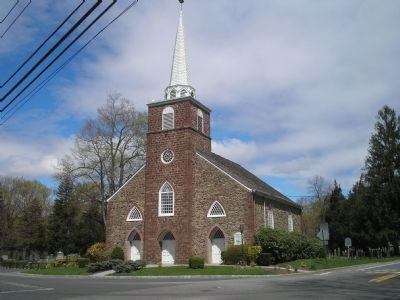
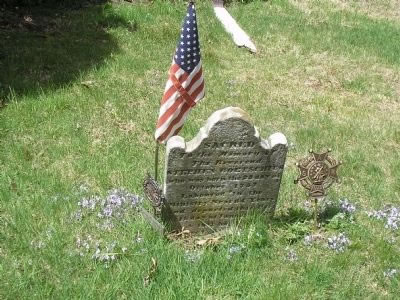
Known as, "The Old Stone Church", it has been ministering to this area since 1784. The present structure of native stone was completed in 1819. Buried here are: The Rev. Stephen Goetschius minister 1819-1835, The Rev. Dr. Isaac Van Kampen minister 1893-1935, and many Revolutionary and Civil war veterans.
Teaneck
493 Teaneck Road
Teaneck, NJ 07666
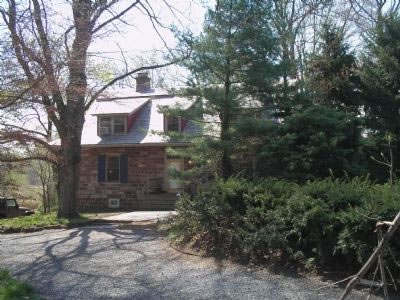
This old house was built around 1735 by Hendricks Brinkerhoff on land owned by his grandfather since the 17th century. An excellent example of early Dutch Architecture, it has been in the possession of the Brinkerhoff and Demarest descendants since it was built, and is one of the oldest in Bergen County.
Tenafly
20 Forest Road
Tenafly, NJ 07670
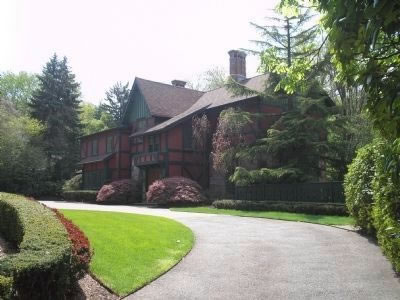
Built about 1867 for the Charles J. Everett family, this house was designed by famous architect Richard Morris Hunt in the Swiss Chalet style. Everett was noted as an inventor. In 1919 it became the home of Harvey Dunn, a prominent artist whose studio was nearby. Both Everett and Dunn were active in Tenafly civic affairs. The house has been enlarged and remodeled over the years.
Tenafly
256 Tenafly Road
Tenafly, NJ 07670
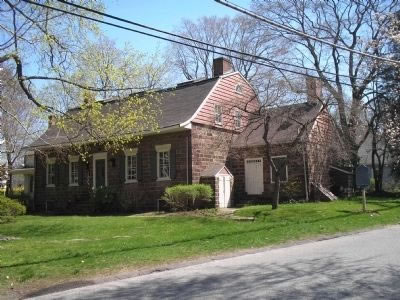
This house is a fine example of Dutch Colonial architecture. The south wing of the house was built by Roelof Westervelt in 1745. The land had been purchased by his grandfather, in 1695, from the Lord Proprietores of East Jersey. The central section of the house was completed around 1798, and the north wing was added in 1825. Ownership of the house remained in the Westervelt family until 1923.
Tenafly
Jefferson Avenue
Tenafly, NJ 07670
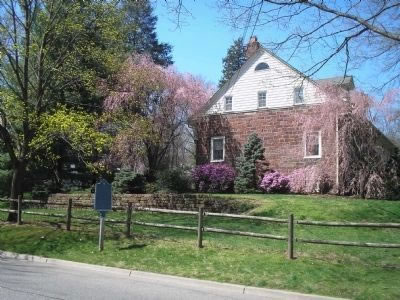
Stands on land purchased by William P. Christie for 500 pounds for 100 acres. In 1804 he built his home. Following his sudden death, in order to be fair to the many heirs, the house and the land were sold at auction to three buyers. In 1836 Samuel Parsels erected the large wing east of the Christie House. In 1860 he sold his property to Charles Newcomb. This example of an early split-level house.
Tenafly
1 Piermont Drive
Tenafly, NJ 07670
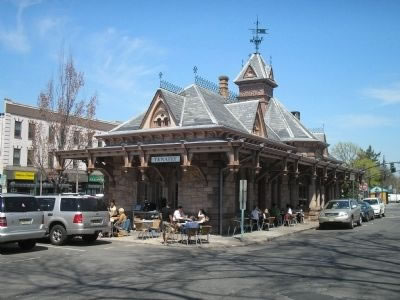
Built in 1872 when George Huyler donated the land and a third of the cost. Residents and the Northern Railroad of New Jersey shared equally in the balance. Designed in High Victorian Gothic by Architect Daniel T. Atwood, the station opened in 1874 serving rail and later trolley passengers. Acquired in 1963 by the borough, restored with funds from the New Jersey Historic Trust and Tenafly in 1994, the station is once more a town focal point.
Teterboro
Industrial Avenue
Teterboro, NJ 07608
The home of Gates Flying Circus. Teterboro built Fokker tri-motors flown by Richard E. Byrd over the North Pole (1926); South Pole (1929); Atlantic (1927); and by Amelia Earhart over Atlantic (1928). Clarence Chamberlin, Ruth Nichols, Floyd Bennett, Charles A. Lindbergh, Bernt Balchen and Bill Odom flew here. First airmail route flown to Boston (1926). Teterboro is now (1972) a general aviation airport.
Washington Township
25 Chimney Ridge Court
Washington Township, NJ 07676
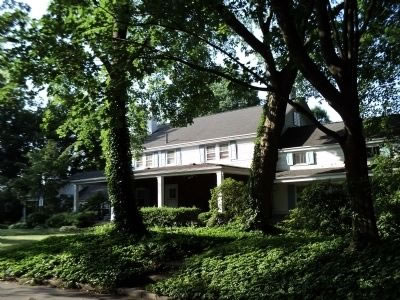
Oldest house in Washington Township, built by Nicholas Zabriskie about 1750. Wings added after 1770 and second story frame raised above original native sandstone in 1812. Tradition says house was an Underground Railway depot for escaping slaves before Civil War. Theodore Roosevelt is said to have been a frequent visitor between 1915 and 1917.
Westwood
1019 Westwood Avenue
Westwood, NJ 07675
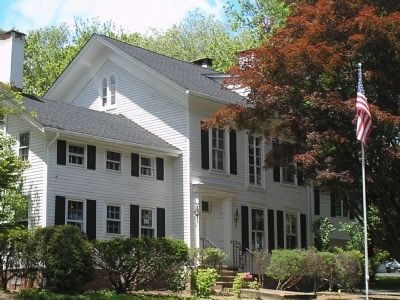
Built about 1864 by Claudius with a kitchen wing, it has elements of Greek Revival and Italianate styles of architecture. He purchased a half interest in the farm and mill works owned by his brother Nicholas. Their firm was known as the Collignon Brothers, noted for chair manufacture, including the patented folding deck chairs for ocean liners. The house, with later additions and remodeling, remained in the family until 1895. The mill burned down in 1904.
Westwood
392 Old Tappan Road
Westwood, NJ 07675
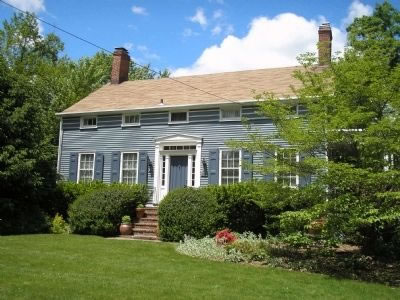
Built about 1836 by John Haring, Jr., the house is an example of Greek Revival architecture and retains many original features. Haring’s homestead was on 14½ acres but he also owned adjacent lands which he farmed for decades. Daughter Sarah Elizabeth, wife of Jacob G. Demarest, a merchant, inherited the premises. In 1908 it came into possession of Nellie and Walter Fred and in 1959 it was purchased by the Williams family.
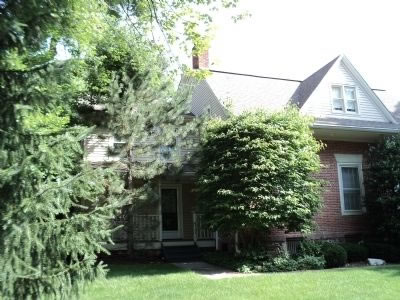
Westwood
70 Old Tappan Road
Westwood, NJ 07675
Erected about 1810 on the site of an earlier house, the brick and sandstone center section is Dutch Colonial style, with wings added c. 1820-1875. It was the homestead of Teunis Haring, a farmer and Chosen Freeholder of Bergen County. Later owned by son John T. Haring, also a Freeholder, it was occupied by the family for 100 years. Silent motion pictures were produced here about the time of World War I; later it was the “300 House” tavern.
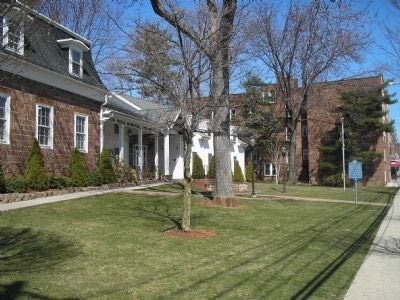
Wood-Ridge
231 Hackensack Street
Wood Ridge, NJ 07075
Located in old “Polifly”, George Brinkerhoff built this house about 1792 on a 200 acre farm he purchased in 1784. Owned in 1806 by son Henry G. and in 1849 by his son, Enoch, a N.J. Assemblyman. In the 1870’s, great-grandson Henry E. remodeled the house. He later became a founding councilman of the Borough of Wood-Ridge. Purchased in 1905 by Leopold Brandenburg, Mayor in 1918-19. The house was renovated as the town memorial library in 1954.
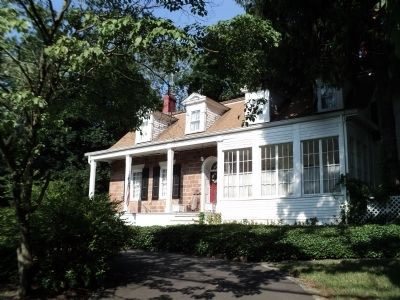
Woodcliff Lake
259 Pascack Road
Woodcliff Lake, NJ 07677
This sandstone and frame house was built about 1794 by Peter P. Post, a third generation miller from Pompton, who settled here in 1789 and operated a gristmill along nearby Bear Brook. Later owners included the Abraham J. Demarest family who were occupants for fifty years. Combining country and Federal styles of architecture, the house was enlarged and remodeled in the late 1800’s.
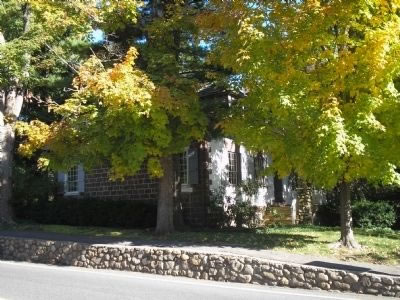
Wyckoff
Sicomac Avenue
Wyckoff, NJ 07481
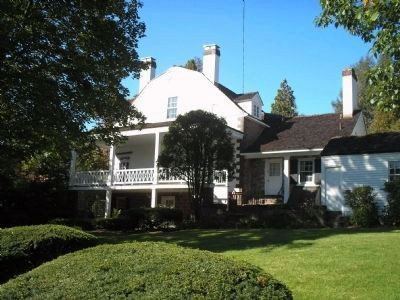
Erected about 1812 by John C. Stagg on site of earlier building owned by his father, Cornelius Stagg, a veteran of the Revolutionary War. The basement was operated as a grocery store for many years by John C. Stagg. His son, Albert, sold to Richard Terhune in 1846. Judge Nehemiah Millard, one of the area’s first railroad commuters to New York City, purchased house in 1868. It was later owned by the MacDonald family.
Wyckoff
421 Franklin Avenue
Wykoff, NJ 07481
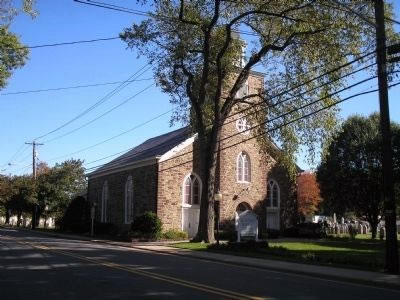
Built in 1824 by Albert Van Voorhees, this Federal home replaced his earlier house. The land, owned by father William since 1720, was called “Wikehoff”. Albert, a veteran of the Revolution and a Justice, deeded the new home to grandson Albert J. Van Voorheis. In 1867 it was purchased by Uriah Quackenbush who willed it to his granddaughter, Grace Quackenbush Zabriskie. She bequeathed the home to the Town of Wyckoff in 1973.
Wyckoff
580 Wyckoff Avenue
Wyckoff, NJ 07481
Once known as the Reformed Dutch Church of Wyckoff, this was the first church to be erected in the Township. It was established by members of Ponds Church at Oakland who lived in this area. They constructed the building of local stone and timber on one-half acre of land purchased in 1805. Peter DeWitt was the first pastor. Early settlers are buried in the churchyard.
Photo note: The original NJTGO source credited many historic marker images to Bill Coughlin, courtesy of HMdb.org. Local image paths have been preserved so the page can continue using the existing NJTGO image folder.
Use these NJTGO town links to move from a historic listing into a local town guide. Multi-word town filenames use the new underscore convention.